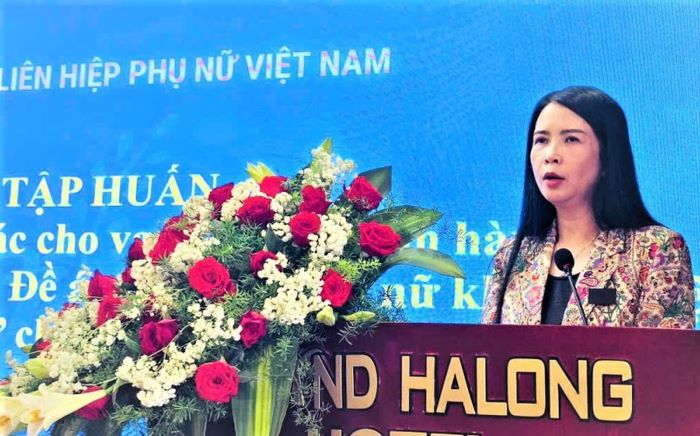
PRESENTATION BY DR. NAFIS SADIK, UNAIDS, New York/Hanoi
Thank you for asking me to be part of this panel. You have chosen an excellent theme—it is vital to create and maintain a secure social environment in which women’s business concerns can flourish. And I am especially pleased to be here in
I would also like to commend the Government of Viet Nam, and the Women’s
We have several speakers and a limited time, so I will make only three points.
1)HIV/AIDS is a current threat in this region.
UNAIDS estimated in 2004 that 10 million adults and children in Asia-Pacific would be newly infected by 2010; three million would have died; and the economic cost would be $17.5 billion. This may well be an under-estimate: there were 930,000 new infections in 2005 alone and 600,000 people died. Remember that the best estimates are extrapolations from data which are sometimes incomplete and unreliable. The problem we are addressing at this consultation underlines how the data can be distorted by stigma, discrimination, denial and concealment.
What we can say with some certainty is that the HIV/AIDS epidemics in Asia-Pacific countries are broadly speaking at the same stage as in sub-Saharan
Men who have sex with men; injecting drug users and people exposed to infected blood products are at heightened risk; but the disease spreads mainly by sexual contact between men and women.Women and men who have several partners – including sex workers and their clients – are at special risk. These high-risk categories overlap to a considerable degree. For example, research in
Many Asia-Pacific societies choose not to recognise that sex between men exists.Others have made it a criminal offence; but ignoring and stigmatising an unwelcome fact will not make it go away. one of the biggest risks in this region is refusal to respond to realities, whether it is drug use, prostitution, extra-marital sex or sex between men. Asia-Pacific countries can remove the threat of a widespread HIV/AIDS epidemic in the next ten years; but only if they are willing to face facts and respond to them.
2)Women are at particular risk. Women now account for more than half of new HIV infections in the Asia-Pacific region. Young women are at particular risk: 60 per cent of new infections occur among young people, and girls have considerably higher rates of infections than boys their own age. The physiological fact is that women are more than twice as vulnerable to HIV/AIDS infection as men. The sociological fact is that women’s subordinate status – in their level of education; in economic power; in marriage, and in society at large, makes them many times more vulnerable. For example,
Marriage offers young women no protection against HIV/AIDS; sometimes quite the opposite. Young women tend to marry older men, and their upbringing encourages them to trust their husbands. Unfortunately, their trust is often misplaced; surveys in
There is a close connection between sexual violence and HIV/AIDS. Women in violent or coercive relationships are 50 per cent more likely to contract an HIV infection. Recent research in Asia-Pacific shows a high incidence of sexual violence and coerced sex on the part of husbands towards their wives. Many of these women are young, some of them very young: nearly two-thirds of young women in Asia-Pacific are married by the time they are 18.These young women have no redress and no-one to turn to. Cultural norms across the region, especially in the rural areas and among the urban poor, give no encouragement or support to a wife who resists her husband for any reason. In most areas of her life, including sex, she has no choice.
Sexual violence within marriage is coming under scrutiny and criticism in many countries. I wish I could say the same of sexual abuse of young girls within the family. Here too we find girls suffering at the hands of the men closest to them; and here too we find a culture of silence, to match the silence that surrounds HIV/AIDS.
Many married women find themselves in a dilemma when they become pregnant. If they suspect they might be HIV-positive, voluntary counselling and testing may be available; but revealing their status may mean rejection by their husband and condemnation in the community. In many cases, VCT will not help them, because services and care are not available; so many cases go undiagnosed, and many mothers and children suffer in silence.
The burdens of HIV care fall mostly on women; they are often last in line for treatment and are far more likely to bear the stigma of living with HIV/AIDS. Women in fact are often blamed for their husbands’ infection—a bitter comment on the value that Asia-Pacific cultures place on women.
At the same time, women’s work underpins the region’s economy; and your many other daily roles – as housekeeper, cook, health aide, educator, child-care specialist, or nutritionist, for example – hold the family and community together. As a matter of human rights and simple justice, it is intolerable to expose Asia-Pacific’s women unnecessarily to the burdens of HIV/AIDS; as a matter of practical economics, it is insupportable.
3)Women and girls must have the means, information and power to protect themselves. The complete answer to the exposure of women to HIV/AIDS infection lies first in empowering all women with health care, education, rights in marriage and inheritance, and the power of the purse; and second, in changing the behaviour and underlying attitudes of men. Both of these aims should claim the close attention of government and civil society.
Health care overall, and sexual and reproductive health care in particular, is of vital interest to women. Women in the Asia-Pacific region need new prevention methods they can use themselves, such as microbicides: but these are still some years away. In the meantime, women leaders should press for more attention to the existing range of prevention possibilities, such as male and female condoms; for their availability to all women throughout the region; and for the necessary support to women who wish to use them. For example, the Vietnam Women’s
A practical step will be to integrate reproductive health and HIV/AIDS prevention services. Many parts of the region still offer separate stand-alone facilities – but epidemiology and economy alike call for integration. I hope you will press for this necessary and obvious reform. one possibility would be to introduce integrated services in the workplace, so that women workers could avail themselves of two necessary services in one visit.
Education is equally important for married and unmarried women, both for the confidence and self-esteem it brings, and for their access to health information and services. Education and empowerment is especially important for young women, who are at heightened risk of infection, whether they are married or not. A practical step towards keeping more girls in school would be to eliminate school fees.
Education for all is a long-term project. The necessary legal reforms to ensure women’s rights will also take some time. Male behaviour change may take even longer. In the meantime, women leaders should be realistic. Sex workers are highly vulnerable to HIV infection and highly likely to pass it on. UNAIDS found that 16 per cent of sex workers in
Strong efforts are needed to ensure that migrant workers, and travelling workers such as truck drivers do not bring HIV/AIDS with them, or take it home when they return. Transactional sex with both males and females is common among migrant and travelling workers, and protection is the exception rather than the rule. Their families need to be able to protect themselves.
There are many examples in the region of successful outreach to displaced populations; to migrant workers; to those who travel in the course of their work, and the male and female sex workers who serve them. Women leaders should press for upgraded and more comprehensive services, at the same time as they urge the men concerned to accept responsibility for their families’ welfare.
Women, especially young married women, need the full weight of the law to safeguard their health and protect them from violence. I hope you will introduce and support the necessary legislation and insist on its vigorous enforcement.
Trafficking of women for sexual purposes is an extreme form of gender-based violence. It is second only to drugs in its value to organised crime. It is a gross violation of human rights and a threat to the health and wellbeing of societies across the region. Trafficked women and girls are essentially slaves without rights. They cannot protect themselves or demand protection from the men who use them. Trafficking contributes directly to the spread of HIV/AIDS. Every effort should be made to draw attention to trafficking and take the necessary measures to stamp it out.
At the same time, there must be a determined attempt to inform and educate men about the risks of using trafficked women for sex, and about the realities of HIV/AIDS. A report from
Poverty makes women available for trafficking, and the spread of economic self-reliance among women in the region will contribute to ending it. UNAIDS would be pleased to assist APEC in the creation of an APEC-wide coalition to address gender inequalities and the impact of HIV/AIDS on women, particularly in the world of work. Working with the ILO to protect the rights of female workers, including labour migrants, represents a critical opportunity. Business leaders and women entrepreneurs can ensure adoption of and adherence to the ILO Code of Practice on HIV/AIDS and the World of Work
Conclusion
My final suggestion would be for women legislators and policymakers, women’s groups and alliances of businesswomen to advocate strongly for the necessary overall changes in policy and leadership. The 2006 UNAIDS Report shows how leadership in
There will be opposition—but women in Asia-Pacific countries are familiar with that. Women leaders successfully fought for the right to family planning, against a solid wall of prejudice. Now women must fight for the right to protect themselves against HIV/AIDS.
At the very least, women should demand that reproductive health and HIV/AIDS prevention programmes serve women’s needs, whether for voluntary counselling and testing; treatment for HIV infection; child care, contraception, or condoms. There is no cure for HIV/AIDS and none is on the horizon. We can only stop HIV/AIDS by preventing its spread. Women stand to lose most from the disease: women leaders must act together to stop it.
Thank you.