
Vietnamese women play growing role in green and digital transition
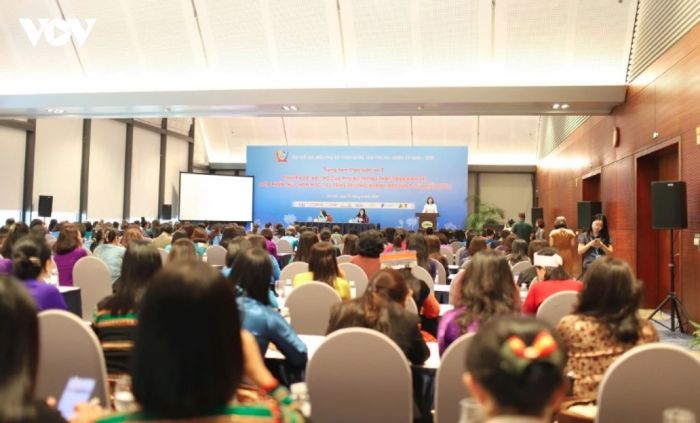 Seminar on the role of women in economic development and their contribution to the country's rapid and sustainable growth is held on June 17 as part of the 14th National Women's Congress.
 Opening the seminar, Tran Lan Phuong, Vice Chairwoman of the Vietnam Women's Union, said women's unions at all levels had implemented various programmes during the past term to support women's economic development, entrepreneurship, access to credit, science and technology, and digital transformation. Hundreds of thousands of women received support to start businesses, while millions gained access to credit, helping improve incomes and living standards.
According to Phuong, new development requirements call for a shift from providing economic support alone to fully unlocking women's potential. She emphasized the need to strengthen women's capacity to participate more deeply in science and technology, innovation, digital transformation and emerging economic sectors, while fostering a generation of women entrepreneurs with modern management skills and international competitiveness.
However, many women and women-owned businesses continue to face challenges related to digital skills, access to technology, innovation and markets.
She also called for discussions on measures to increase women's participation in new growth drivers, improve policies for women entrepreneurs and women-led startups, and further reform the operations of the Vietnam Women's Union.
At the seminar, Trinh Thi Huong, Deputy Director General of the Agency for Private Enterprise and Collective Economy Development under the Ministry of Finance, said digital transformation, innovation, green development and the private sector were becoming key growth drivers for Vietnam. In this context, women-owned businesses have greater opportunities to participate in emerging sectors of the economy.
Women-owned businesses currently account for around 21-25% of operating enterprises in Vietnam and make remarkable contributions to job creation, innovation and private-sector development.
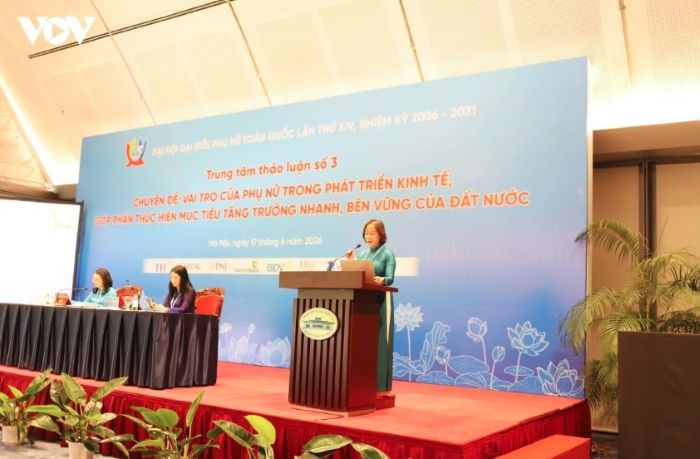
Prof. Dr. Tran Thi Viet Nga, Director of the Vietnam-Japan Institute of Advanced Technology at Hanoi University of Civil Engineering speaks at the event
An increasing number are adopting digital technologies, e-commerce, green products and circular economy models. According to Huong, women are not only adapting to change but can also become drivers and leaders of transformation.
At the same time, many women-owned businesses remain small in scale, face resource constraints, have limited access to finance and encounter challenges in investing in technology, meeting green standards and joining global value chains.
Participants stressed that a more comprehensive support ecosystem was needed to improve access to finance, technology, knowledge and markets and promote the development of women-owned businesses during the 2026-2030 period.
Regarding the role of women in science, technology and the green economy, Prof. Dr. Tran Thi Viet Nga, Director of the Vietnam-Japan Institute of Advanced Technology at Hanoi University of Civil Engineering, said science, technology and innovation were central to the green transition. She noted that women intellectuals, scientists and entrepreneurs were playing an increasingly important role in green and sustainable development.
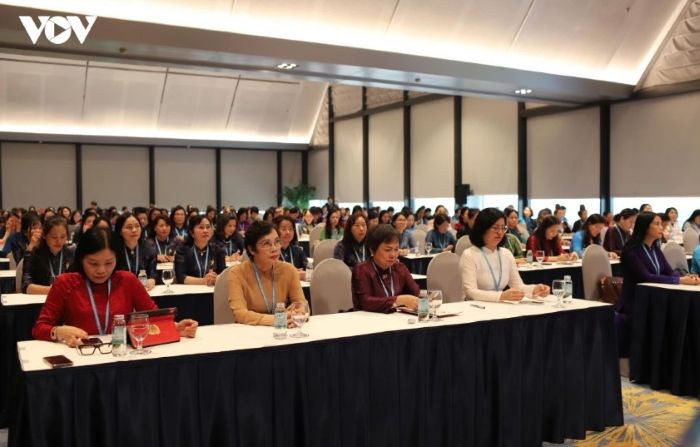
Citing data showing that women account for about 37% of the STEM workforce in Vietnam, above the global average, Nga said further efforts were needed to remove barriers related to access to finance, technology and market opportunities.
However, women account for a relatively low share of leadership positions in science and technology. She also proposed expanding access to finance and green credit, strengthening digital skills training, and links among the State, scientists and businesses.
Participants agreed that investing in women not only advances gender equality but also creates momentum for growth, innovation and sustainable development as Vietnam accelerates its green and digital transition in the new period.


