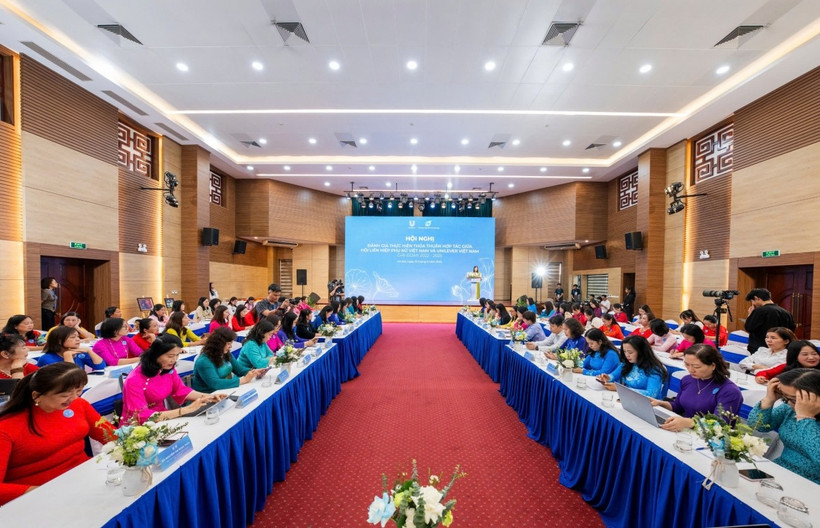
Women and Girls' empowerment - Key to addressing the imbalanced sex ratio at birth

Therefore, strengthening gender equality and enhancing women and girls' empowerment are key to addressing effectively this issue. This issue was discussed during the workshop on "Addressing the Imbalance of Sex Ratio at Birth from Gender Perspectives" co-organized today in Ha Noi by the Ministry of Labour, Invalids and Social Affairs (MOLISA) and the United Nations Population Fund (UNFPA) in
Participants of the workshop were representatives from MOLISA, Ministry of Health, other line-ministries, national experts, research institutes, and Government agencies at the national and sub-national levels as well as the United Nations organizations, Embassies and the international and local NGOs in
Addressing the workshop, Vice Minister of Labour, Invalid and Social Affairs/ Vice President of the National Committee for Advancement of Women Mr. Nguyen Thanh Hoa stressed that: "One of the major factors contributing to the rise of the SRB imbalance in
The workshop was a great opportunity for policy makers, national experts and programmers on gender equality to discuss, learn experiences from other countries and develop effective interventions from gender perspectives. The outcomes from the workshop will help
The imbalanced SRB will affect
During the workshop, national experts presented the relationship between gender inequality and sex ratio at birth imbalance. The experts also highlighted the importance of behavour change communication to address gender discrimination. "More emphasis is needed on promoting the role of women and girls in society, improving their status and realising their rights. Young men and boys must be encouraged to step forward as agents of necessary social cultural change. Leaders and party members play a key role in setting an example in promoting gender equality," said Mrs. Tran Thi Van, UNFPA Officer-in-Charge in
The workshop has been succeeded with the commitments and recommendations on gender equality of the all parties to support the effective implementation of the National Strategy for Gender Equality (2011-2020) and the National Programme on Gender Equality (2011-2015) and ensure a society for all.